
Back in February when I planted the three new orchard trees, the lower half of the garden was waterlogged and I feared they would drown. Our garden is heavy clay over gravel and almost completely flat, so that when it rains the water just sits there, puddling under the grass and encouraging a deep layer of moss. In the surrounding fields and the building sites of nearby Northstowe, and the A14 roadworks , water lay in huge puddles and the balancing ponds created to reduce flooding were full to the top. This part of South Cambridgeshire looked like the Somme with mud and water everywhere.
Scroll forward 4 months…
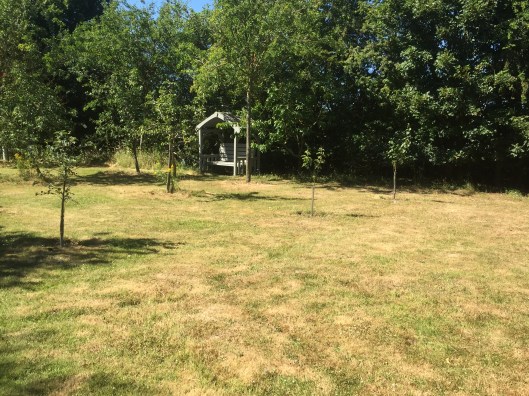
and today we have had NO rain for over a month. My four water-butts have been empty since May and I water the new trees weekly from my wheelbarrow, tottering down the long garden, and I pray for rain. Nothing is growing, many things are withering and the grass is brown and crunchy under foot.
The only plants that look happy are the nepeta, lavender and other ‘mediterranean’ plants , although my young bay trees will need water soon and are looking unhappy.
In the winter my thoughts turn to plants that will cope in waterlogged conditions, such as willow and fritillaries, while in Summer I am glad for the plants that thrive in the hot and dry. I suppose that if I want to reduce the time and effort spent in watering (not to mention the waste of precious mains water) I will need to work out what will survive in our local extreme conditions and expect to lose some plants each year. I carefully nurture the plants that I planted in the Spring and hope for the best for the others.
So this is climate change I understand- wetter winters and hotter dryer summers. Gardening, at least in this, the driest part of the country, is going to have to change.
 easterneden