
After two very wet months, water table rose so high in the garden that we now have extensive groundwater flooding. We are used to the middle garden getting ‘soggy’ in the Winter, but this is something else. All around us fields are also flooded and our neighbours also have lakes instead of gardens. In a flat low-land landscape like this there is simply nowhere for the water to go.
Our beautiful cabin flooded and much of the garden is impassable, especially now that the floodwater has an inch thick layer of ice over it. I slosh and slide around, attempting to access the shed and greenhouse (which are also flooded) and hoping that I won’t topple and fill my wellies with icy water.
To say that this is disheartening is an under-statement and I think I have been grieving this week, overcome by moments of tearfulness and hopelessness. However, nature has a way of recovering and I have to remember that by the Summer we will be dry and baking, and this flood will be a memory. This is one reason for blogging this now, so that I can look back and remember that all things change, especially gardens.

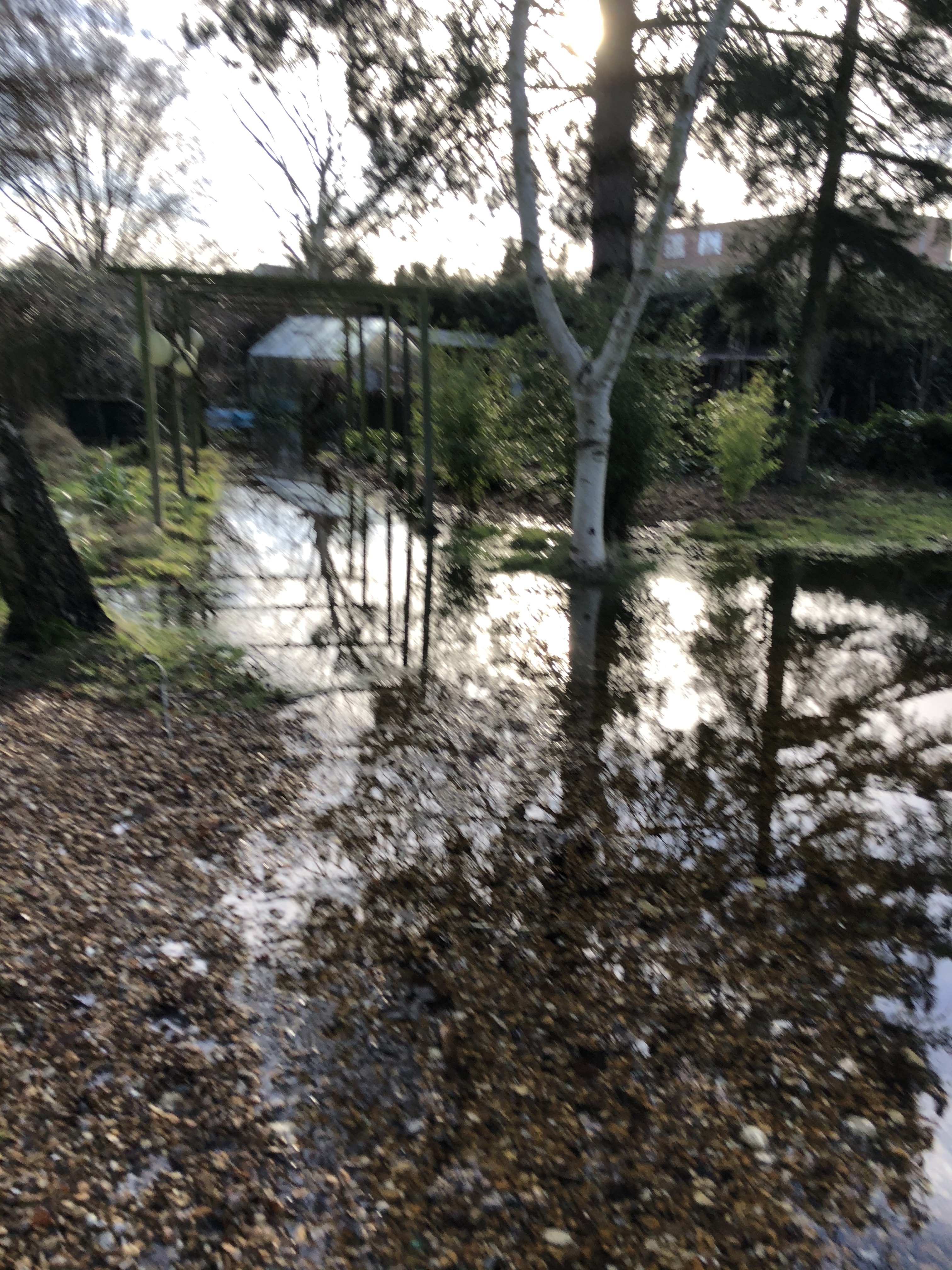
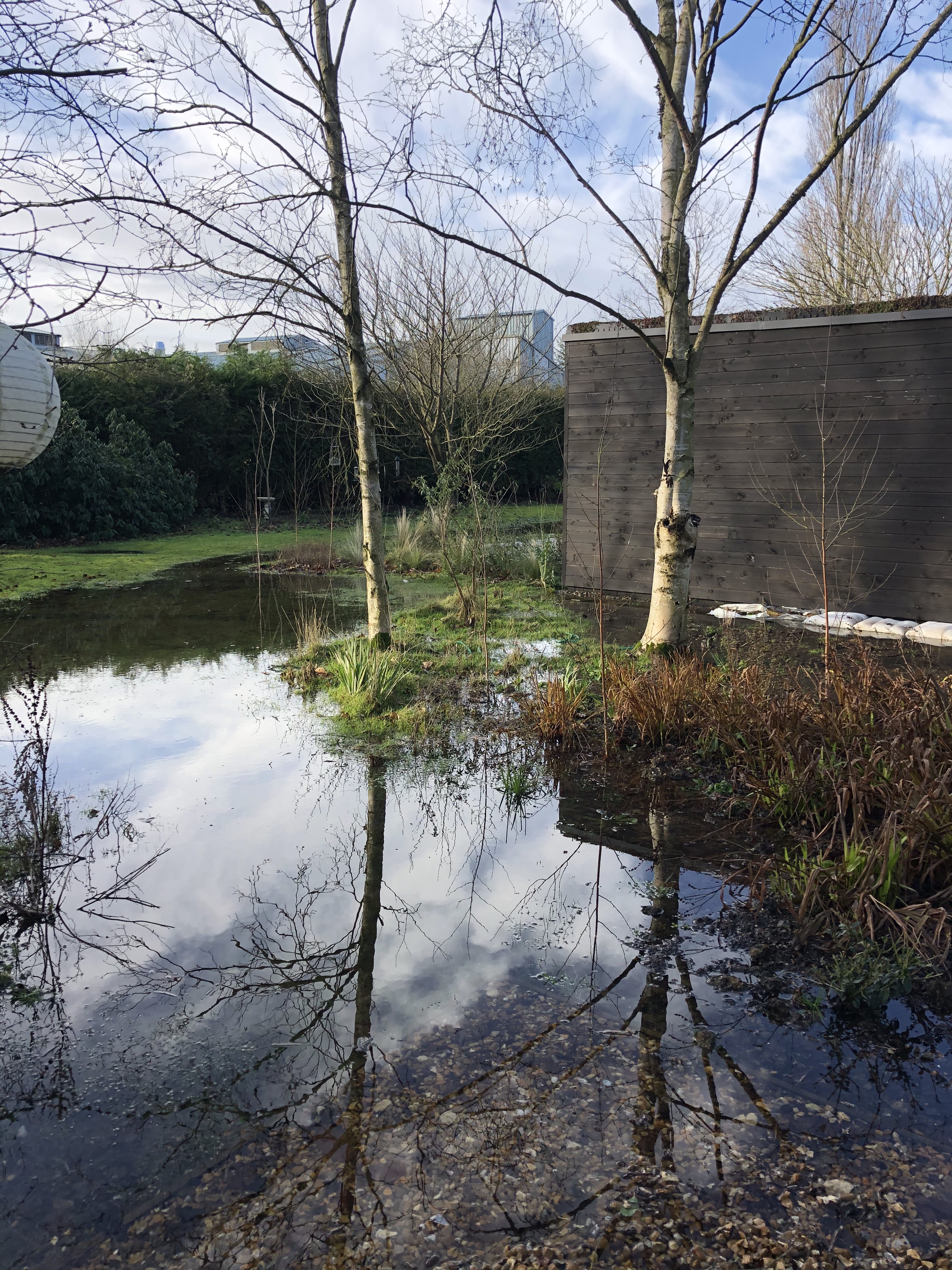
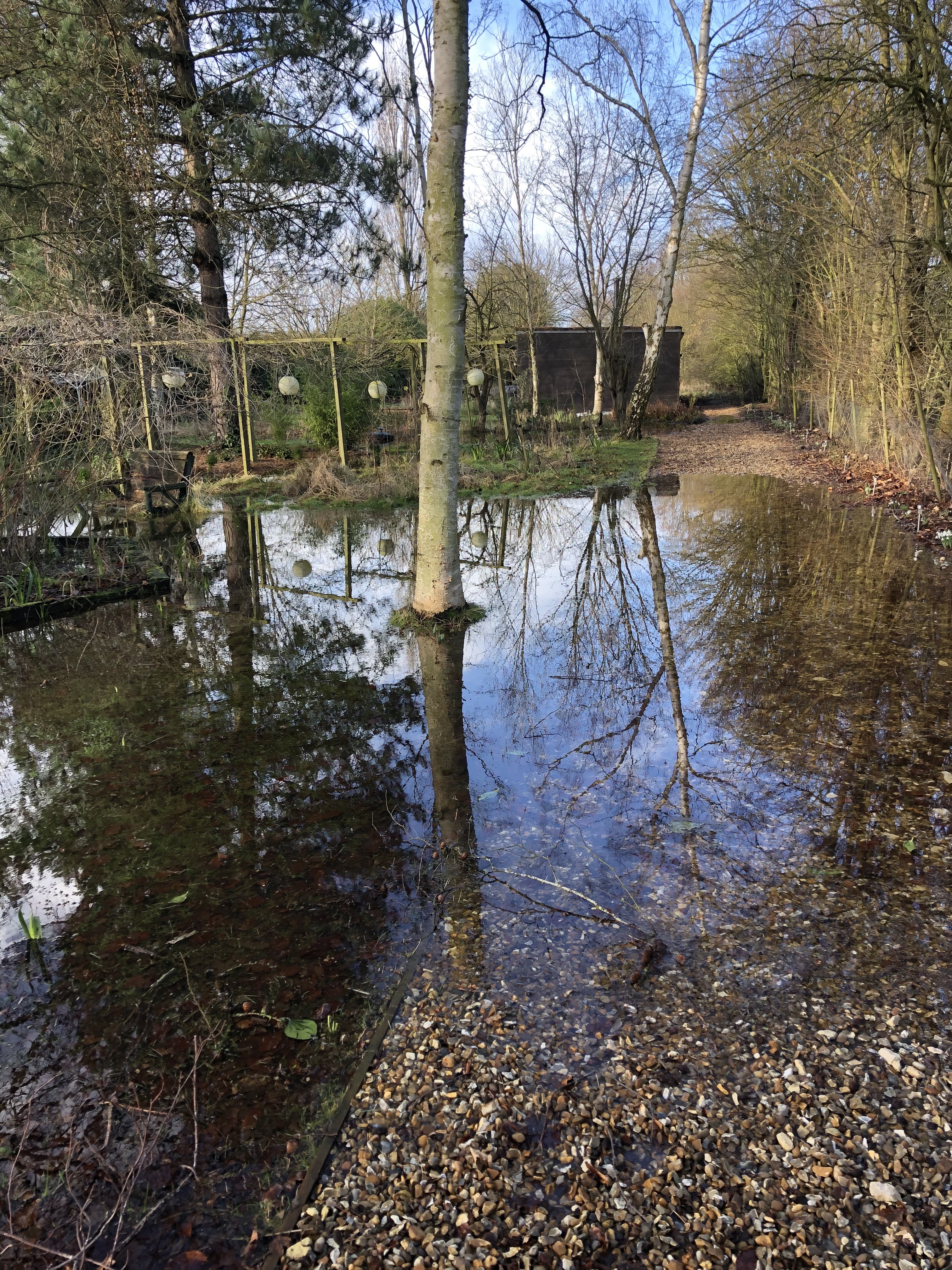
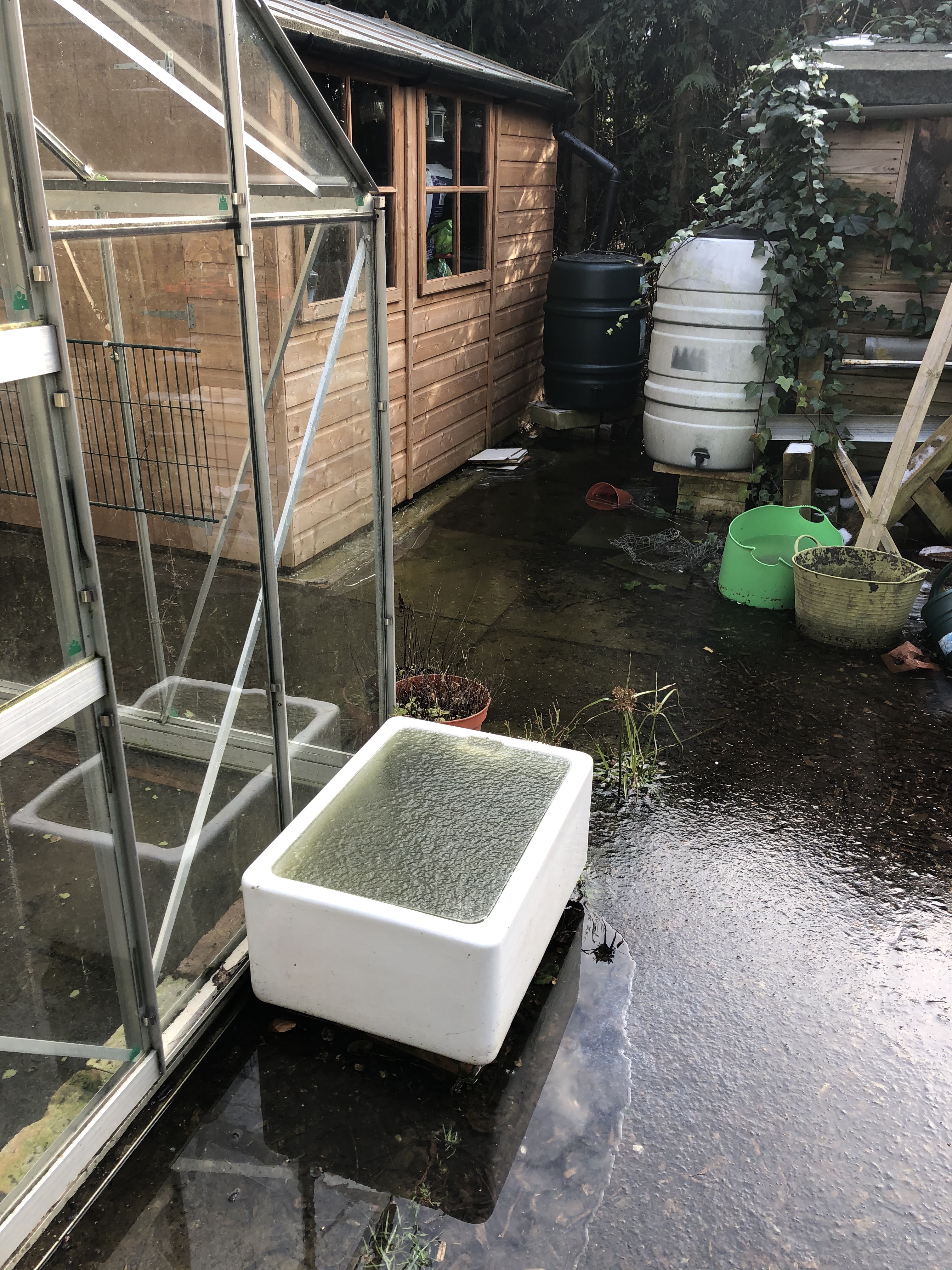
We also need to think about how to manage this situation in the future, as these sorts of events will be more common as, due to climate change, Winters become wetter.
The clear solution is to create ponds and ditches to contain the water and to provide lower points for the water to flow to. We can even pump water from where we don’t want it ( around the cabin) to where we do ( a wildlife pond towards the lower end of the garden). Of course groundwater flooding is far more difficult to manage than flash flooding, as the high water table is not something that we can necessarily control, however some large scale landscaping to create gradients and collection points may work, especially when the situation is not so severe.
So I am planning a formal pond nearer to the house, which will be lined, but will also collect water, some ditches to the middle of the garden and a large wildlife pond towards the end of the garden. We can introduce local sedges to the ditches as well as willows, to make a connection with the local landscape. Potentially we can add much of interest to what is actually a very flat, and at times, monotonous profile. As my dad says “necessity is the mother of invention” and we could approach this difficult situation as a spur to greater invention and development of our garden, creating more interesting wildlife habitats and visual contrasts.
I also understand that evergreens are good for wet winter soils as they draw up water all year around. So I am planning more planting in the way of evergreen hedges to break up the space and also provide interest. So, there is much to do. However not much can be achieved right now with so much water and ice. I think it is time to draw up plans and develop creative ideas. If you have any thoughts , please do share them in the comments. All ideas gratefully received. I am more used to thinking in terms of dry gardens on this side of the country and very unused to too much water.
 easterneden